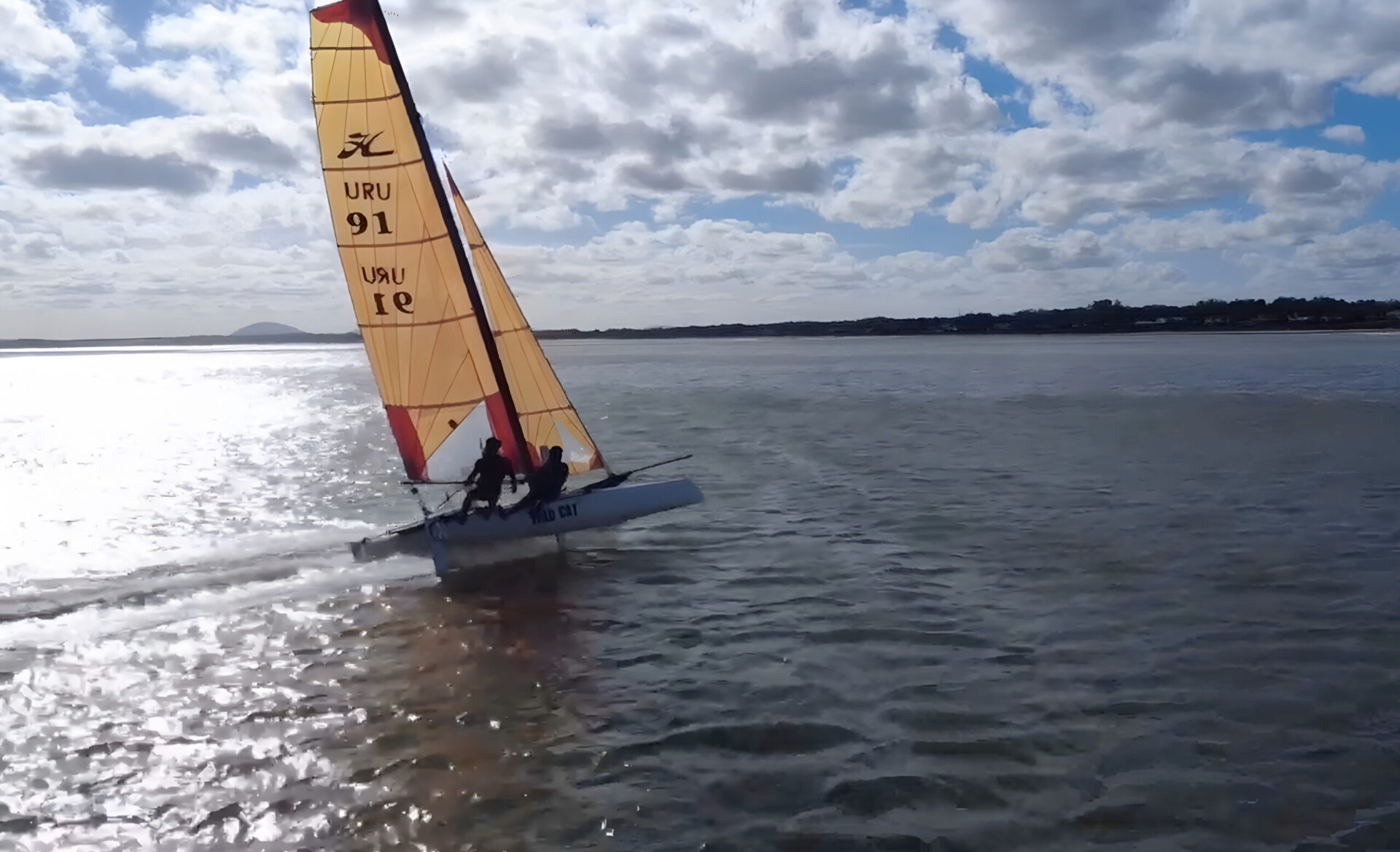
The Caballo Loco project is clearly not a design and building venture itself, but it had so many parts, challenges and it influenced me on so many ways that I thought it was worth highlighting.
Like many things in life, it started a long time ago when I was young and I had the enormous opportunity that although living in Argentina and being from a middle class family, my parents took the chance to take classes of sailing when I was 7 years old, in the widest river in the world, which it can turn quite risky and overwhelming in many ways.
That experience sparked a love I never could let go, and when I moved to Uruguay, that longing went to a different level being just 50km away from the sea. During 8 months of the year I’ve been swimming, kite surfing and joining some friends’ sailboats for years, but something inside myself told me it wasn’t enough.
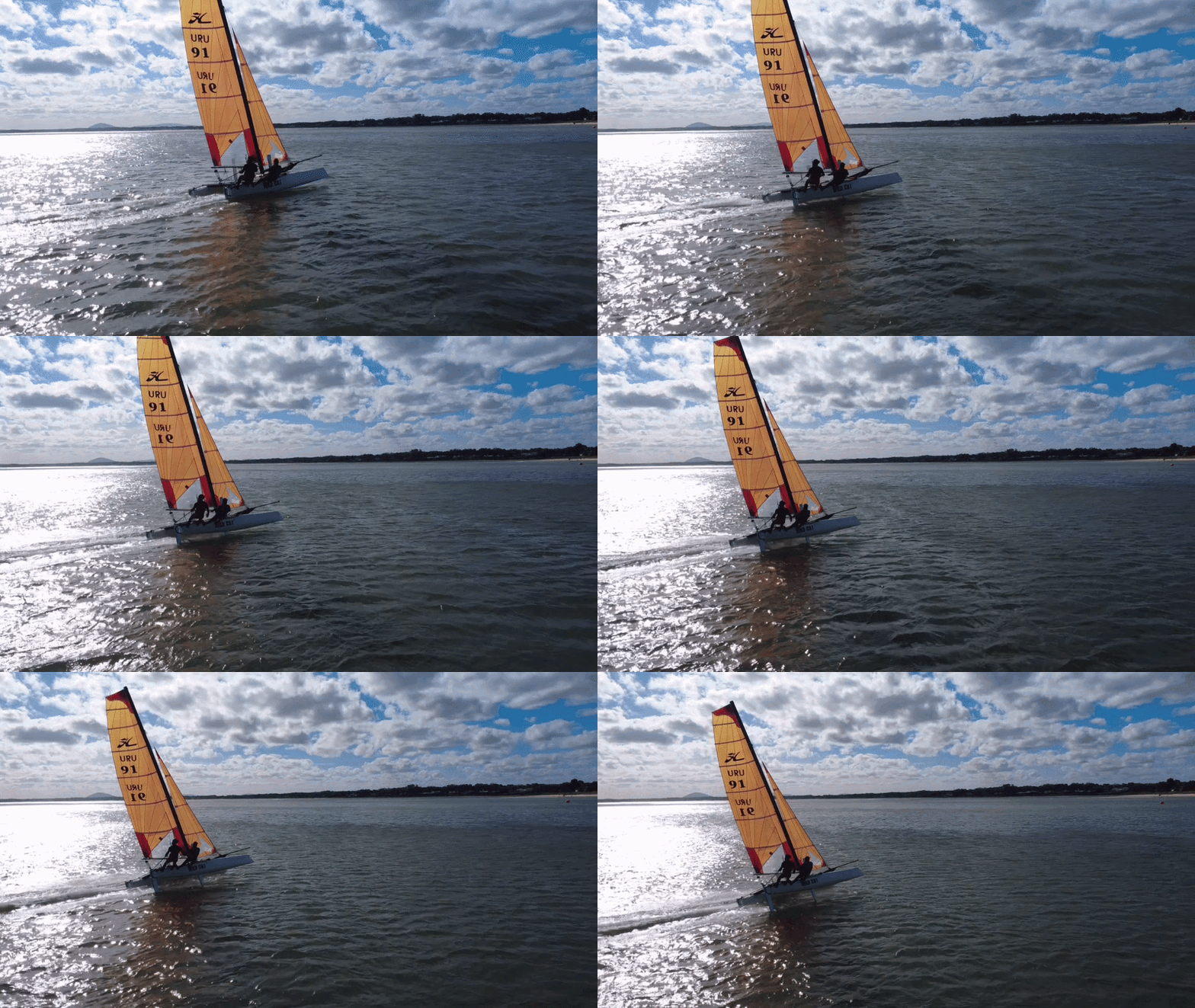
In the summer of 2025 Lu told me she wanted to learn to sail, so we rented a small hobiecat in the Garzon lagoon, it was windy and we had a blast. She didn’t know much but she likes speed, water, has common sense and she is strong. In a way she knew how to sail, it’s like that kind of people that have rhythm, sound criteria and are skilled with their fingers, they already know how to play the guitar, they just haven’t practiced yet.
She wanted to learn to sail and I told her if we wanted to repeat that experience the best was to go for a proper boat, for me it was the perfect excuse to make something I have wanted for long. The specs I had in mind were, a small sailboat (ideally one didn’t have an expensive port and maintenance), something we could handle between 2 or 3 people the most, and for sure a vessel where we could feel the speed and learn as I did when I was young.
The result was quite obvious, we needed a dinghy in shape and budget, because they can get really expensive. At the beginning I searched for a 49er without much success, there are many 29ers but I wasn’t convinced. Then I found out that what I was looking for was a F18 catamaran, which is a class that has been running for decades, it’s for 2 people (although you can carry a third one), it is under budget, and there are many in Uruguay, best of all, it’s probably still the fastest boat you can find in any coast – we’re talking about sailing between 10 and 20 knots as normal, and it can go higher. This is a double trapeze dinghy, with a 9m high mast, 20m2 of main sail and jib, 10m2 more with the spinnaker, cunningham and mast rotating rigging and many more features.
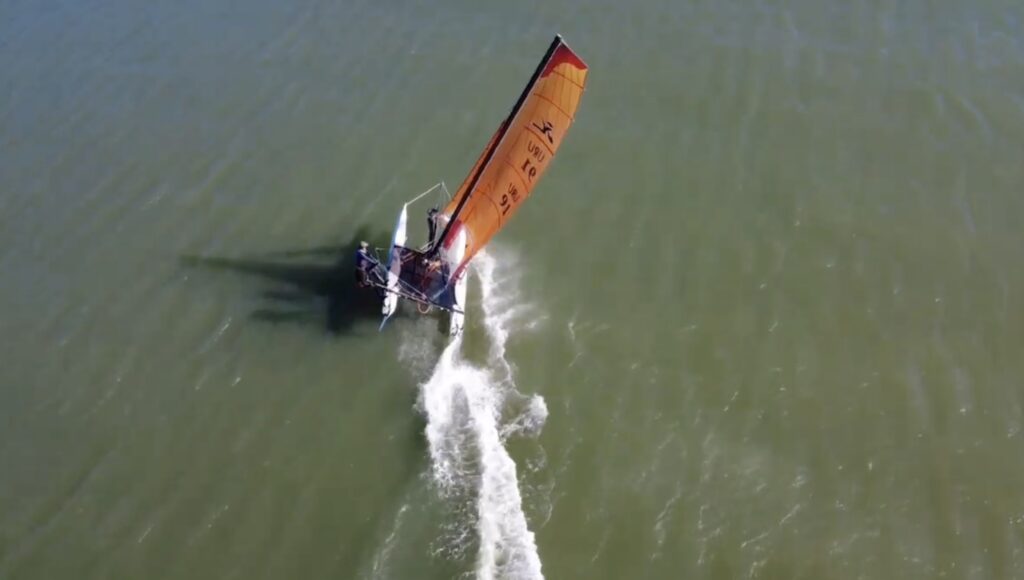
The survey took me about 6 months and it went smooth because in Uruguay everything is small, even more so in the sailing industry, the trick is to find something really good. I was lucky to strike with Caballo Loco (yes, that was its name 😀), an F18 from 2013, which was built by Hobie Europe as the Wild Cat model. The boat had competed in two world cups and it was in very good shape, of course like everything, it needed some maintenance.
I won’t go into all the details, but I’ll mention some of the biggest troubles/repairs we had on that summer:
- Finding a suitable trailer to bring it from Montevideo to Punta del Este and traveling with it, this boat is 2.6m wide.
- The foot of the mast broke while we were putting it down so we had to find a new one, which is a very special piece of bronze – this is a vessel with a 9m mast on a boat that weights just 180kg.
- We broke the jib and the spare jib we had, that was easy to fix because there is a good sail fixer we know.
- Broke the bowsprit, yeah, such a big one, this is a piece of 3.5m of duralumin – and we broke it while entering the boat into the water.
- Last but not least, by the end of the season we lost a daggerboard, they are carbon fiber and quite unique, nice budget.
All this was done with a tight schedule since the marine where we could keep the boat was only till April, trying to spend as little as we could, and of course, with my limited knowledge and contacts, honestly it was a race against time – in a way, like racing a Dakar where you need to keep the vehicle going, no matter what. In the meantime I learnt a LOT about F18s parts and rigging, the coast of Uruguay, and of course, sailing a catamaran, which wasn’t my speciality – all my life I’ve been in monohulls where apparent wind wasn’t the main thing.
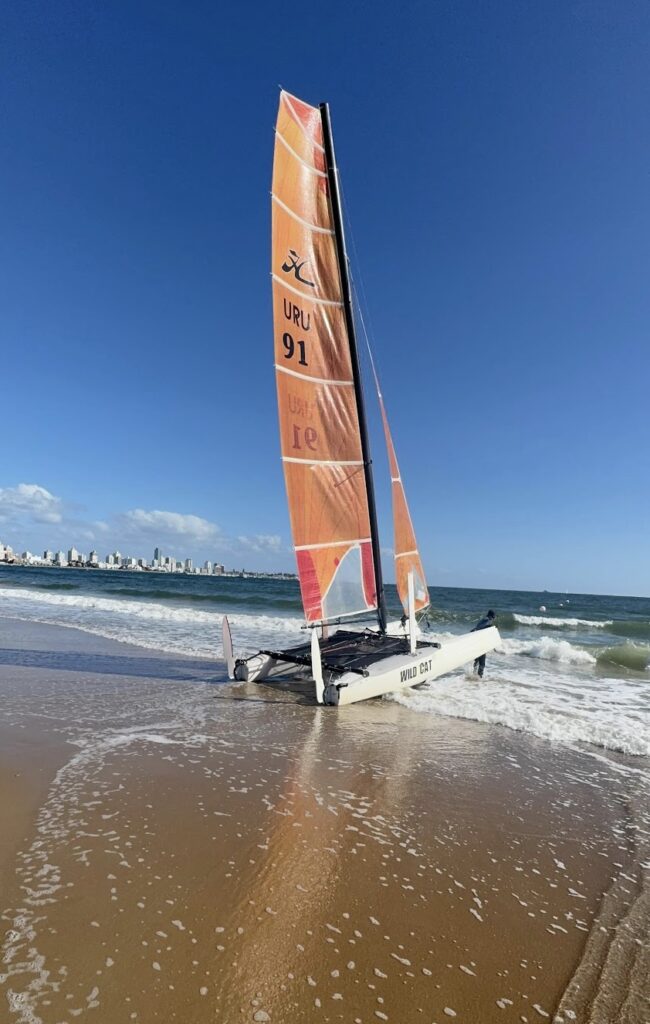
The result was probably one of the best summers of my life. I reconnected to something that is very rooted in me, that kind of experience where you feel like a fish on water.
To highlight some the best sailings of that first season:
- Going around Gorriti Island many times and taking the boat from the Parada 10 to Solanas beach, crossing sealions and jumping fishes.
- Getting out sailing with very good friends like Javi and Chino. Also my goddaughter who lives in Chile was a couple days of the summer in Punta del Este and we went out together.
- The day that we discovered the wind was stronger, we went into a manouvre to adjust the shroud, the gust got high and we ended capsizing.
- The journey from Solanas beach to Gorriti Island was a very special one, that day we did 30 nuatic miles (aprox 60km) under 2 hours and a half.
- As soon as we started sailing we had the possibility to go out with the son of the previous owner of the boat, and in another occasion with the previous owner himself, both proficient sailors, the two sessions were like masterclasses for me.
This project went so big for myself that I ended building a new shed + space to hold all the equipment at home. It required for me to learn many things, when you go out as a captain in a ship you’re in charge of the whole thing, and of course, your crew, your rigging, your routes NEED to go well. There are many things that can get uphill, from the physical world to our more psychological, sailing for me is like going into space, you are by your own.
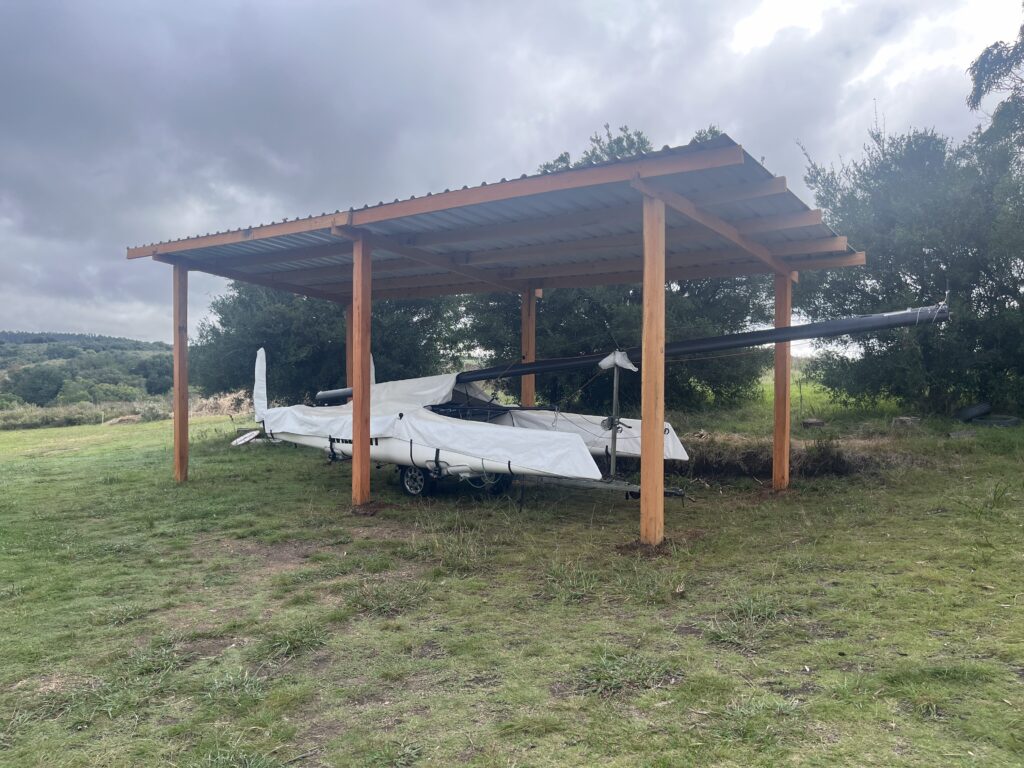
I’m glad that this first season was all what it was meant to be, a journey where we could experiment and take risks, learn, take more risks, learn more, and in the meantime we we’re getting more proficient, confident and you enjoying every step. Looking forward to have more of this in the future!
Special thanks to Lu, Mono and Alex, all marina people who cared for the boat in the Mansa and Solanas beach.